How to reread your journal and find the patterns in it
· 5 min
Most journals are written and never read. That is a pity, because one entry tells you how you felt on a Tuesday, and fifty entries tell you who you are. The patterns that matter, what you keep worrying about, what you keep putting off, what reliably makes a good day, only show up across time.
Why reading back matters
In studies of expressive writing, the people who benefited most were those whose writing moved, over several days, towards explanation: more because, more I realise(Pennebaker, 1997). Understanding came from connecting things, not from recording them. Rereading is how you connect entries that were written weeks apart. The wider evidence is in writing by hand to understand yourself.
A monthly review in thirty minutes
- Read the month straight through, quickly, without stopping to cringe.
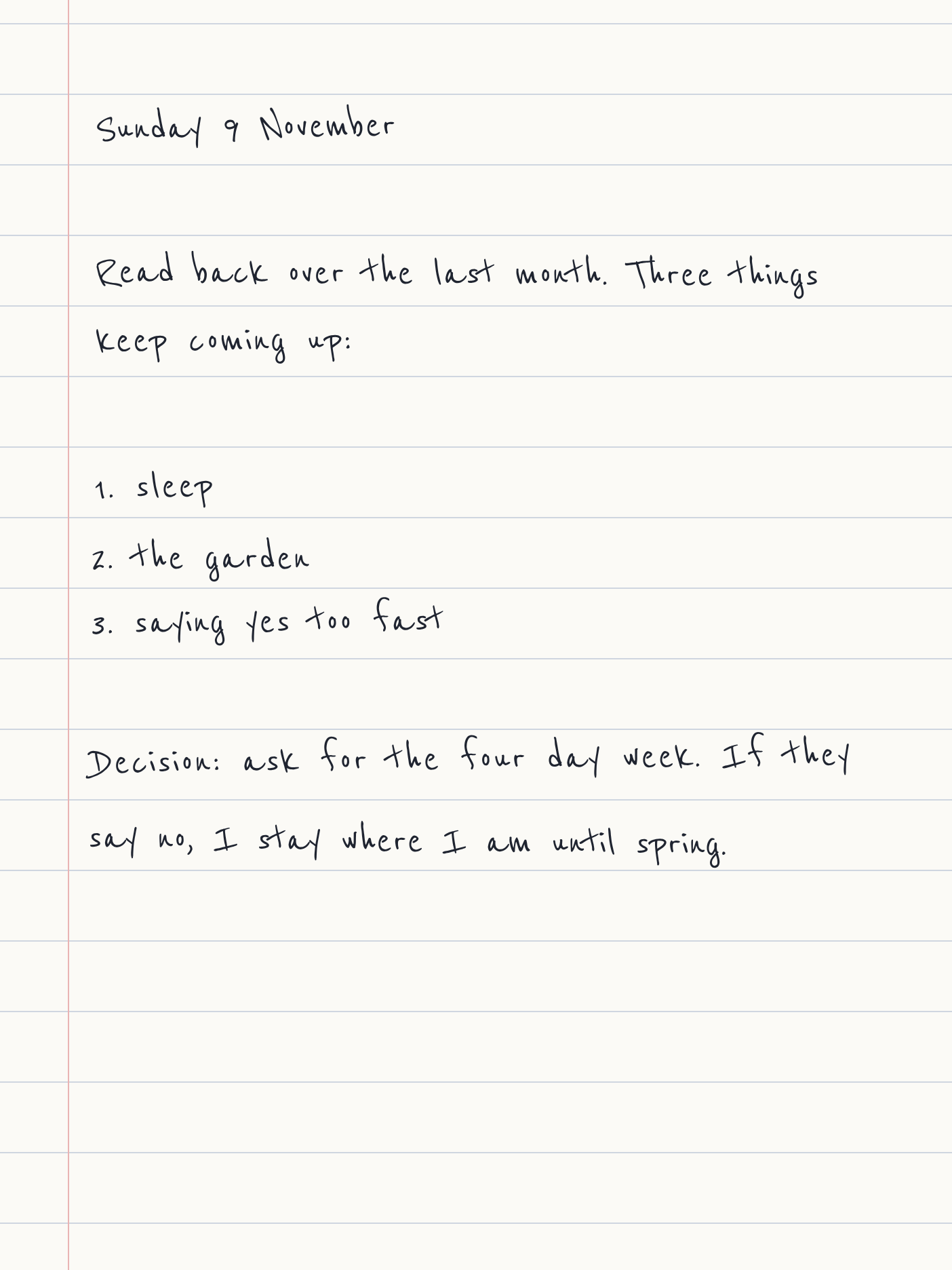
- Mark what repeats. A name, a worry, a wish. Three mentions is a pattern.
- Mark what changed. Something that filled the first week and is gone by the fourth.
- Write one page about it. “This month I kept coming back to…” This page is the one you will reread next year.
Questions worth asking
- What did I say I would do, more than once, and not do?
- Which people appear on the good days? On the bad ones?
- What was I dreading that turned out fine? What do I never write about?
- What would I tell a friend who had written this?
- What did I decide, and did I write down why?
The trouble with paper
A month is easy to reread. A year across four notebooks is not, and the questions that span years, “when did I first write about leaving?”, are the valuable ones. On paper they mean an evening of leafing and a guess.
This is where turning pages into text earns its keep. With your notebooks in Searchable Ink you can search one word across all of them, newest first, and read each hit beside the original page.
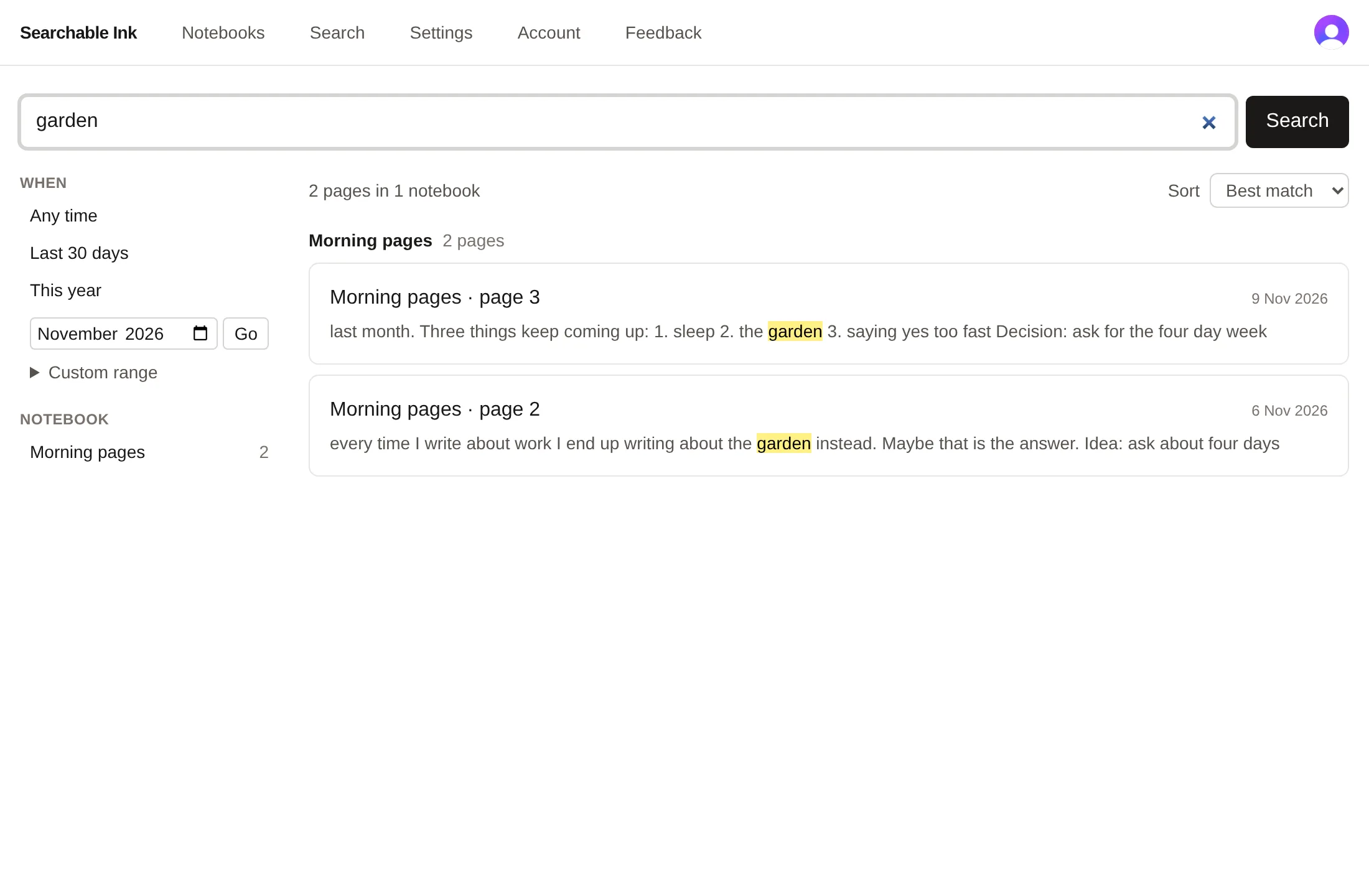
Some searches to try on your own journal:
- A person’s name.
- tired, anxious, grateful: whichever word you actually use.
- decided or decision, to see what you resolved and when.
- should. It is usually a list of things you don’t want to do.
If you use an AI assistant, you can go a step further and ask it about your notebooks: “what have I written about work since June, and has the tone changed?” Treat the answer as a pointer to pages worth rereading, not a verdict.
Keep writing by hand
None of this means typing your journal. The writing can stay slow and private and on paper or e-ink. The reading back is the part that benefits from a computer.